

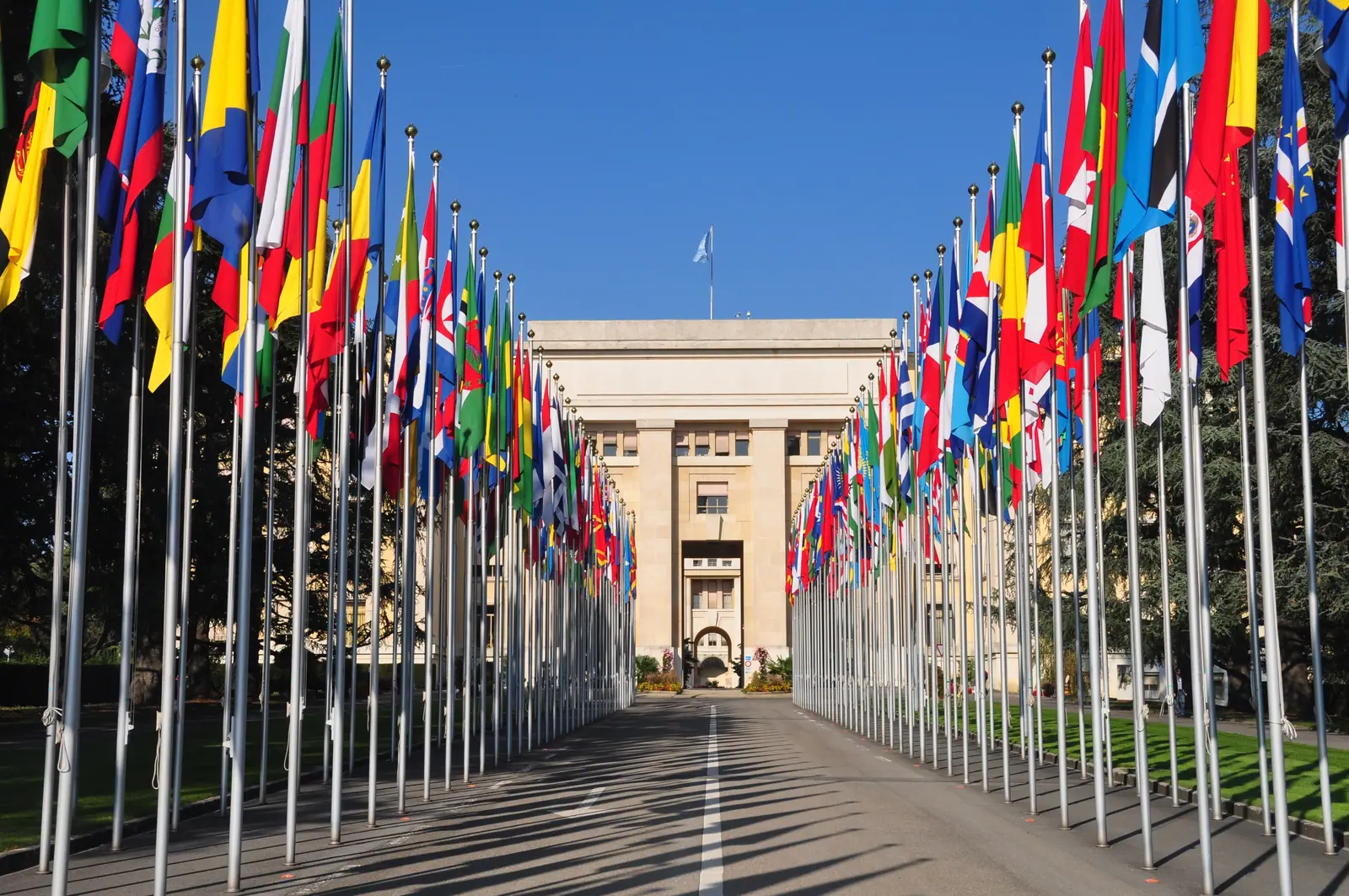
Diplomacy is often treated as a specialized function of foreign ministries, embassies, treaties, and formal negotiations between governments. That description is accurate but incomplete. At its core, diplomacy is a leadership discipline for advancing legitimate interests in the presence of difference without making coercion the first or only instrument available. It requires leaders to understand another position well enough to work with it, represent their own position clearly enough to protect what matters, and identify whether a disagreement contains any ground on which durable cooperation can be built. Those capacities matter in international relations, but they also reveal why diplomacy remains one of the world's most consequential leadership skills.
The difficulty of diplomacy is often underestimated because its visible language can sound simple: listen carefully, communicate clearly, seek common ground, and avoid unnecessary escalation. In practice, each of those demands becomes harder when the stakes are high. Nations enter diplomatic relationships carrying history, strategic interests, economic pressure, security concerns, cultural differences, and domestic expectations. Leaders must work inside those realities without reducing the other party to a problem that can be solved through force, pressure, or public positioning alone. Genuine diplomacy asks for judgment under conditions where impatience can easily appear stronger than restraint.
Effective diplomacy begins with the discipline to distinguish a stated position from the interest beneath it. A position tells the other side what a party currently wants. An interest explains what that position is intended to protect or achieve. The difference matters because positions may appear irreconcilable while the underlying interests still contain room for movement. One nation may insist on a particular security arrangement while the deeper concern is predictability. Another may resist an agreement because it fears loss of sovereignty rather than because it rejects cooperation itself. Diplomatic skill looks beneath the surface language long enough to understand what is actually driving the disagreement.
That kind of understanding does not require agreement. Diplomacy becomes weak when listening is confused with surrender or when civility is mistaken for the absence of conviction. A capable diplomatic leader can understand another nation's perspective and still conclude that the position is unacceptable. The value of understanding is that it produces a more accurate decision. Leaders who know what the other side values can determine where compromise is possible, where boundaries must remain firm, and where a dispute is being intensified by misunderstanding rather than by genuinely incompatible interests.
Modern communication has made this discipline more difficult, not less necessary. Governments can communicate faster, public statements circulate globally within minutes, and political reactions can develop before private deliberation has had time to mature. Speed creates access, but it can also compress judgment. A message drafted for a domestic audience may be received internationally as a threat. A partial statement may be interpreted before context is available. A leader can feel pressure to respond publicly before the strategic consequences of that response have been assessed. Diplomacy therefore depends increasingly on the capacity to resist the pace of communication when the quality of judgment requires more time.
As the creator of Systems Civility, Dr. Diane Tucker states in Book Three, ‘Systems Civility For Nations: Human Stability as National Infrastructure,’ that relational intelligence at the international level encompasses “the diplomatic intelligence, cross-cultural governance capacity, and cooperative relationship-building that global stability requires.” This places diplomacy inside a larger governance responsibility. Diplomatic competence is not only the ability to negotiate a favorable outcome. It is the ability to work effectively across cultural, linguistic, political, and relational complexity without allowing those differences to become automatic sources of instability. A nation that develops this capacity strengthens its ability to participate in an interdependent world without losing clarity about its own interests.
The relational dimension matters because international cooperation is never conducted between abstract systems. It is conducted by people representing systems, histories, and populations that may understand trust, authority, time, obligation, and public commitment differently. Technical expertise can define the terms of an agreement, but relational intelligence often determines whether the parties can remain engaged long enough to reach one. Leaders who interpret every difference through their own cultural assumptions can create unnecessary friction even when the substantive interests are compatible. Diplomatic skill requires enough cross-cultural awareness to recognize when disagreement is strategic and when it is partly a failure of interpretation.
Shared interest is also more demanding than simply splitting the difference between competing positions. Compromise can end a negotiation, but it does not automatically create a durable agreement. A stronger diplomatic outcome identifies what both parties have a reason to sustain after the meeting is over. This may involve economic continuity, regional security, access to resources, protection of citizens, scientific cooperation, migration management, or the prevention of a larger conflict. Agreements last when the structure continues serving interests that both parties recognize as real, not merely when each side accepts an equal amount of dissatisfaction at the negotiating table.
This is one reason quiet diplomatic successes are frequently undervalued. Conflict is visible. Prevention is not. A breakdown creates headlines, emergency meetings, public statements, and measurable consequences. A dispute that was resolved before escalation may leave little evidence of how serious the risk actually was. The absence of crisis can make diplomatic work appear less consequential than the dramatic response that would have been required if that work had failed. Institutional leaders face the same problem when prevention receives less recognition than recovery, even though prevention may have preserved far more value.
The undervaluation of diplomacy can produce a dangerous leadership bias toward visible strength. Assertiveness has a place in statecraft, and nations must be able to defend legitimate interests. The problem begins when leaders assume that firmness is demonstrated mainly through public confrontation or coercive leverage. Diplomatic strength can be equally demanding because it requires leaders to remain clear about what cannot be conceded while continuing to search for an outcome that makes escalation unnecessary. It asks for patience without passivity and restraint without confusion about national interest.
Dr. Diane Tucker also states in Book Three, “internal governance quality is a shared international responsibility.” That framing helps explain why diplomacy cannot be treated as an optional courtesy between otherwise independent national systems. Trade, technology, migration, public health, finance, environmental pressures, security, and information networks routinely cross borders. A decision made within one national system can create consequences beyond it. Diplomatic capacity is therefore part of how nations manage interdependence without allowing interdependence to erase sovereignty or turn every cross-border issue into a contest of control.
This does not mean national interests disappear beneath a generalized idea of cooperation. Durable diplomacy depends on clarity about interests precisely because cooperation without clear interests becomes unstable. Nations need leaders who can identify what must be protected, what can be negotiated, what can be shared, and what requires a longer process of trust-building before agreement is possible. Diplomatic leadership becomes credible when cooperation is chosen deliberately rather than performed rhetorically, and when national commitments are made with enough precision that other parties can understand what those commitments actually mean.
Deliberate development of diplomatic capability is therefore a governance investment. Experience alone does not guarantee that a leader will become skilled at listening under pressure, interpreting unfamiliar perspectives, managing escalation, or identifying shared interests. Those capacities can be strengthened through structured preparation, exposure to different cultural and political contexts, scenario work, negotiation practice, historical study, and disciplined reflection on failed as well as successful engagements. Nations that depend entirely on the natural temperament of individual leaders leave a critical capability to chance.
Diplomacy also depends on institutions capable of supporting leaders with continuity, expertise, and memory. Political leadership changes, but diplomatic relationships often extend across decades. Professional institutions preserve knowledge about prior agreements, unresolved tensions, cultural context, and the practical history of cooperation. When that institutional memory is weak, each new leadership period risks rediscovering lessons that were already learned. Strong diplomatic systems allow elected or appointed leaders to exercise judgment with access to the accumulated knowledge necessary to understand the consequences of their choices.
Diplomacy remains one of the world's greatest leadership skills because disagreement is not disappearing and interdependence is not receding. Nations will continue to encounter conflicting interests, competing priorities, cultural differences, security pressures, and moments when public demands favor immediate confrontation. The question is whether leaders possess enough diplomatic capability to determine when firmness requires resistance, when stability requires cooperation, and when a seemingly irreconcilable dispute contains a path that coercion would never reveal. The strongest diplomatic leadership does not avoid difficult differences. It creates the conditions in which nations can face those differences without allowing every disagreement to become a crisis.